
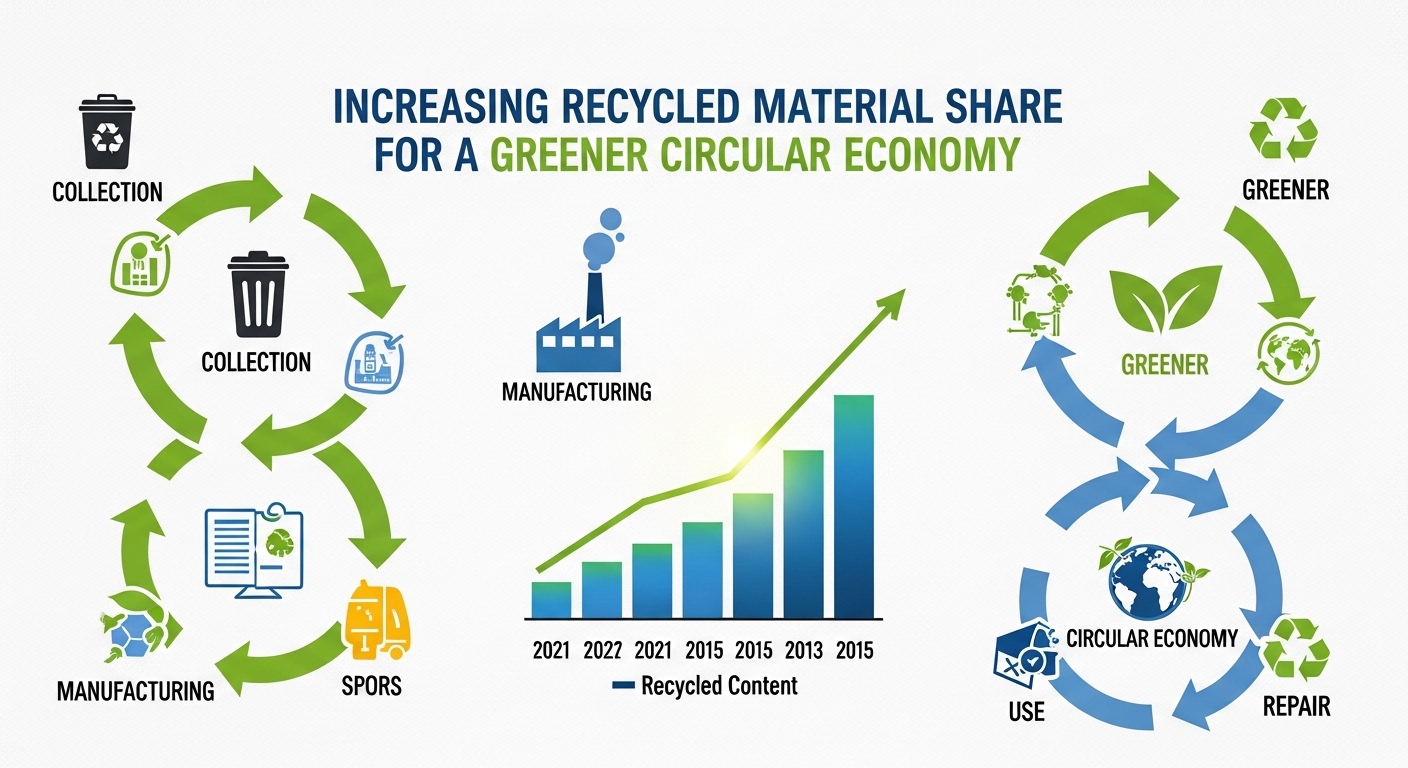
As the world faces growing environmental challenges such as climate change, resource depletion, and increasing waste production, the need for sustainable solutions has never been more urgent. One of the most promising approaches to addressing these issues is the circular economy, a system that focuses on reducing waste, reusing materials, and recycling resources to keep them in circulation for as long as possible. Within this framework, the concept of Recyclatanteil plays a crucial role.
Recyclatanteil refers to the percentage of recycled material used in the production of a new product or packaging. Instead of relying entirely on newly extracted raw materials, manufacturers incorporate recycled inputs—such as recycled plastics, metals, paper, or glass—into their products. For example, if a plastic bottle contains 40% recycled plastic, then its recyclatanteil is 40%.
Increasing recyclatanteil helps conserve natural resources, reduce environmental pollution, and strengthen recycling systems. By integrating recycled materials into production processes, industries can reduce their environmental footprint and move closer to a truly sustainable and circular economy.
Understanding the Concept of Recyclatanteil
Recyclatanteil is essentially a measurement of recycled content within a product. It indicates how much of a product’s total material composition comes from previously used and recycled materials rather than newly extracted resources.
This metric is important because it shifts the focus from simply collecting waste to actively reusing materials in new production cycles. Recycling alone does not guarantee sustainability; what matters is whether recycled materials are actually used again in manufacturing.
Recyclatanteil can include materials derived from:
-
Post-consumer waste – materials collected after consumers discard products (e.g., plastic bottles or aluminum cans).
-
Post-industrial waste – leftover materials from manufacturing processes reused in production.
By increasing the percentage of these recycled materials, companies can reduce their reliance on virgin resources and promote responsible resource management.
The Importance of Recyclatanteil in the Circular Economy
The traditional economic model follows a linear structure: extract resources, produce goods, use them, and dispose of them. This model leads to massive waste generation and resource depletion.
In contrast, the circular economy aims to keep materials in use for as long as possible through reuse, repair, remanufacturing, and recycling. Recyclatanteil serves as a key indicator of how effectively this system is functioning.
When products contain higher recycled content:
-
Fewer raw materials need to be extracted from the environment.
-
Waste materials are transformed into valuable resources.
-
Production systems become more sustainable.
In essence, increasing recyclatanteil helps close the material loop, ensuring that resources remain within the economy instead of becoming waste.
Environmental Benefits of Increasing Recyclatanteil1. Conservation of Natural Resources
One of the most significant benefits of higher recyclatanteil is the conservation of natural resources. Manufacturing new materials often requires extracting resources such as oil, metals, and timber from the environment. This process can lead to deforestation, habitat destruction, and resource depletion.
Using recycled materials reduces the need for such extraction. For example, recycled metals or plastics can replace newly mined or produced materials, preserving valuable natural resources for future generations.
2. Reduction of Carbon Emissions
Producing materials from recycled inputs typically requires less energy than producing them from raw materials. Lower energy consumption means fewer greenhouse gas emissions.
For instance:
-
Recycled aluminum uses up to 95% less energy than producing new aluminum.
-
Recycled plastics require less petroleum and processing energy.
By increasing recyclatanteil in manufacturing, industries can significantly reduce their carbon footprint and contribute to global climate goals.
3. Waste Reduction
Another important benefit is the reduction of waste going to landfills or oceans. Many materials—such as plastics and electronic waste—can remain in the environment for hundreds of years.
When recycled materials are reused in new products, waste becomes a valuable resource rather than an environmental burden. This approach supports waste management systems and prevents pollution.
4. Strengthening Recycling Systems
Higher demand for recycled materials encourages better recycling infrastructure. When industries rely on recycled inputs, recycling facilities receive more investment and technological improvements.
This demand creates a market for recyclates, ensuring that collected materials are actually reused rather than discarded.
Industries Driving Recyclatanteil Growth
Many industries are increasingly integrating recycled materials into their products.
Packaging Industry
The packaging sector is one of the largest users of recycled materials. Many companies now produce packaging made with recycled plastics, paper, or cardboard.
Examples include:
-
Bottles made from recycled PET plastic
-
Paper packaging made from recycled fiber
-
Cardboard boxes produced from recycled materials
Increasing recyclatanteil in packaging reduces waste and improves the sustainability of consumer goods.
Electronics and Technology
The technology sector generates significant amounts of electronic waste. Manufacturers are now incorporating recycled metals, plastics, and glass into electronic devices.
For example, recycled aluminum is often used in laptop or smartphone casings. By doing so, companies reduce the demand for mining and lower environmental impacts.
Construction and Infrastructure
The construction industry also benefits from recycled materials. Materials such as recycled concrete, steel, and glass can be used in buildings and infrastructure projects.
Using recycled construction materials reduces both costs and environmental impact while promoting sustainable urban development.
Fashion and Textiles
The fashion industry is exploring innovative ways to increase recyclatanteil through recycled fabrics and fibers. Recycled polyester made from plastic bottles and recycled cotton are becoming popular alternatives to traditional materials.
This shift helps reduce textile waste and decreases reliance on new raw materials.
Global Progress Toward Circular Material Use
Although progress has been made, the global use of recycled materials remains relatively low. For example, about 12.2% of materials used in the European Union in 2024 came from recycled sources, highlighting both progress and the need for further improvement.
These statistics show that while recycling systems are expanding, there is still significant room for increasing the share of recycled materials in production.
Governments and organizations around the world are therefore introducing policies and strategies aimed at increasing recyclatanteil across industries.
Challenges in Increasing Recyclatanteil
Despite its benefits, increasing recyclatanteil presents several challenges.
1. Quality of Recycled Materials
Recycled materials sometimes have lower quality or inconsistent properties compared to virgin materials. Improving recycling technologies is essential to produce high-quality recyclates.
2. Economic Barriers
In some cases, virgin materials remain cheaper than recycled alternatives. Without incentives or regulations, companies may hesitate to adopt recycled inputs.
3. Limited Recycling Infrastructure
Many regions lack adequate recycling systems for collecting, sorting, and processing waste materials. Improving infrastructure is necessary to increase the availability of recyclates.
4. Consumer Awareness
Consumers also play a role in the recycling process. Proper waste sorting and recycling habits help ensure that materials can be recovered and reused.
Strategies for Increasing Recyclatanteil
To increase recyclatanteil in products and industries, several strategies can be implemented:
Design for Recycling
Products should be designed so that their materials can be easily recycled and reused.
Policy and Regulations
Governments can introduce policies that require minimum recycled content in certain products.
Innovation in Recycling Technologies
Advanced recycling technologies can improve material recovery and quality.
Consumer Education
Educating consumers about recycling practices encourages responsible waste management.
The Future of Recyclatanteil
The future of sustainability will depend heavily on how effectively societies manage resources. Increasing recyclatanteil is expected to become a major focus in environmental policy, manufacturing strategies, and consumer choices.
Companies that adopt recycled materials are not only reducing their environmental impact but also improving their brand reputation and meeting growing consumer demand for sustainable products. Businesses that invest in recycling technologies and sustainable design will likely gain a competitive advantage in the evolving green economy.
Conclusion
Recyclatanteil represents a powerful tool for building a greener and more sustainable future. By increasing the share of recycled materials in products, industries can reduce waste, conserve natural resources, and lower carbon emissions.
As the world transitions from a linear economic model to a circular one, recyclatanteil will continue to play a central role in measuring sustainability progress. Governments, businesses, and consumers all share responsibility in promoting higher recycled content and supporting recycling systems.
Ultimately, increasing recyclatanteil is not just an environmental necessity—it is a pathway toward a resilient economy where resources are valued, waste is minimized, and sustainability becomes the foundation of modern production.