
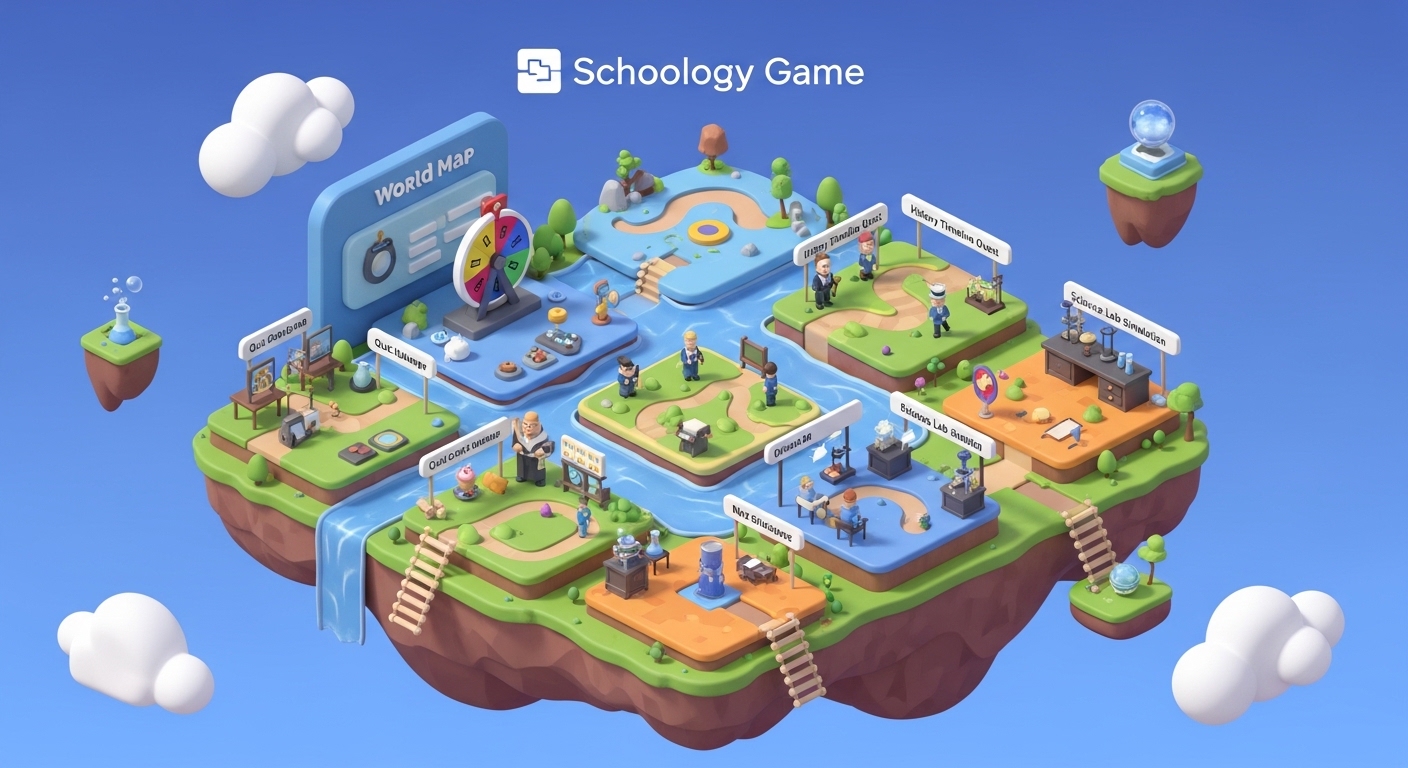
In today’s rapidly evolving educational landscape, traditional teaching methods are being complemented—and sometimes replaced—by digital tools that make learning more engaging, interactive, and effective. One platform that has gained significant attention in this context is Schoology, a widely used learning management system (LMS) designed to facilitate communication, assignments, assessments, and collaboration between teachers and students. While Schoology itself is a robust educational platform, the concept of a “Schoology Game” combines the platform’s functionality with gamification elements to create an immersive and motivating learning experience.
This article explores the concept of a Schoology Game, its role in modern education, how gamification can enhance learning outcomes, and practical ways educators can integrate game-based learning into their Schoology courses.
Understanding Schoology
Before delving into the gamification aspect, it is essential to understand what Schoology offers. Schoology is an LMS that enables educators to:
- Post course materials and resources
- Assign homework and projects
- Conduct quizzes and assessments
- Foster collaboration through discussion boards and messaging
- Track student progress and grades
The platform is widely used in K-12 schools, higher education institutions, and professional training environments. Its flexibility allows teachers to customize courses, integrate third-party tools, and engage students in multiple learning formats.
What Is a Schoology Game?
A Schoology Game is not a standalone game, but rather a gamified learning experience integrated within the Schoology platform. It incorporates elements of game design into educational content to motivate students, encourage participation, and enhance learning retention. Gamification can include features such as:
- Points and scoring systems
- Badges or digital achievements
- Leaderboards to encourage healthy competition
- Progress bars to visualize learning milestones
- Quests or challenges to guide students through lessons
By turning learning activities into interactive challenges, a Schoology Game transforms traditional coursework into an engaging experience that students look forward to.
The Concept of Gamification in Education
Gamification refers to the application of game elements in non-game contexts, such as education. In a Schoology Game, gamification leverages psychology to make learning more rewarding. Key benefits include:
1. Increased Engagement
Games inherently motivate students through fun, challenges, and competition. By integrating game elements in Schoology, students are more likely to:
- Participate actively in discussions
- Complete assignments on time
- Engage in collaborative learning
2. Motivation and Rewards
Gamified systems reward effort and achievement. Features like badges, points, and certificates can:
- Provide tangible recognition for progress
- Encourage goal-setting
- Boost student confidence
3. Personalized Learning
Gamification allows teachers to design adaptive learning paths. Students can:
- Progress at their own pace
- Choose challenges suited to their skill level
- Receive immediate feedback through game mechanics
4. Improved Retention and Learning Outcomes
Educational games and gamified experiences encourage repeated practice and problem-solving. When students interact with content in a game-like environment:
- Knowledge retention improves
- Critical thinking is stimulated
- Real-world application of skills becomes more intuitive
Implementing a Schoology Game
Educators can design gamified learning experiences on Schoology using several strategies:
1. Assign Points for Tasks
Instead of simply marking assignments as complete, teachers can assign points for:
- Submission of homework
- Participation in discussions
- Completion of quizzes
Accumulating points can unlock rewards or badges, motivating students to stay active.
2. Create Challenges or Quests
Teachers can design a series of challenges that students must complete, such as:
- Weekly knowledge quests
- Problem-solving missions
- Group collaboration projects
These challenges give a sense of progression and achievement, similar to levels in a game.
3. Incorporate Badges and Achievements
Schoology supports the integration of badges or digital awards. Educators can award badges for:
- Mastery of specific topics
- Active participation in class
- Peer collaboration and mentoring
Badges serve as visible rewards that encourage continued engagement.
4. Use Leaderboards
Leaderboards introduce friendly competition. Students can see their progress relative to classmates, which can:
- Inspire higher performance
- Encourage consistent effort
- Create a sense of community through healthy competition
It is important, however, to ensure that leaderboards motivate without discouraging lower-performing students.
5. Integrate Multimedia and Interactive Content
Schoology allows integration of interactive content such as:
- Educational videos
- Quizzes with instant feedback
- Simulations and interactive modules
These elements make the learning experience more dynamic and immersive, enhancing the “game” aspect.
Examples of Schoology Game Activities
Here are some practical ways educators can implement Schoology Games:
1. Math Adventure Quests
Students complete math problems to advance through a story or adventure. Points are awarded for correct answers, and badges are given for completing levels.
2. Science Exploration Challenges
Teachers design experiments or research tasks where students earn achievements for successful completion. Virtual labs and simulations enhance engagement.
3. Language Learning Levels
Students progress through language levels, unlocking new vocabulary, grammar challenges, or conversation exercises as they advance. Points and badges reward consistent practice.
4. History Timelines and Missions
Gamified history lessons can include missions to research historical events, create timelines, or complete scenario-based quizzes. Leaderboards track progress across groups.
Benefits of Schoology Games
The integration of game elements in Schoology provides several advantages:
- Enhanced Student Engagement – Interactive tasks capture attention and maintain interest.
- Motivation Through Rewards – Points, badges, and recognition encourage consistent effort.
- Personalized Learning Paths – Students can progress at their own pace and select challenges matching their abilities.
- Collaboration and Social Learning – Multiplayer challenges foster teamwork and peer interaction.
- Immediate Feedback – Gamified assessments provide instant results, helping students identify areas for improvement.
Challenges and Considerations
While gamifying learning through Schoology Games has many benefits, educators should consider the following:
- Balancing Competition and Inclusivity – Leaderboards should inspire without discouraging students who may fall behind.
- Avoiding Overemphasis on Rewards – Focus should remain on learning outcomes, not just points or badges.
- Technical Limitations – Integration of multimedia and interactive content may require additional resources or tools.
- Student Diversity – Gamified activities should accommodate different learning styles and abilities.
The Future of Schoology Games
As educational technology continues to advance, Schoology Games are likely to evolve in several ways:
- Adaptive Learning Technologies – AI-powered games that adjust difficulty based on student performance.
- Virtual and Augmented Reality Integration – Immersive simulations for science labs, historical events, and real-world problem-solving.
- Data-Driven Insights – Analytics to track engagement, skill development, and learning gaps.
- Cross-Platform Gamification – Linking Schoology Games with other LMSs or educational apps for a unified gamified experience.
These innovations will make learning even more interactive, personalized, and engaging.
Conclusion
The concept of a Schoology Game represents a transformative approach to education by combining the platform’s robust LMS capabilities with the motivational power of gamification. By integrating points, badges, challenges, and interactive content, educators can create immersive learning experiences that enhance engagement, retention, and student achievement.
As gamification continues to evolve, the potential for Schoology Games to revolutionize learning is immense. They provide a bridge between traditional educational methods and modern, interactive digital experiences, ensuring that students are not only learning but enjoying the journey.
Ultimately, the success of Schoology Games lies in balancing motivation with meaningful learning outcomes, making education both effective and enjoyable in the digital age.