
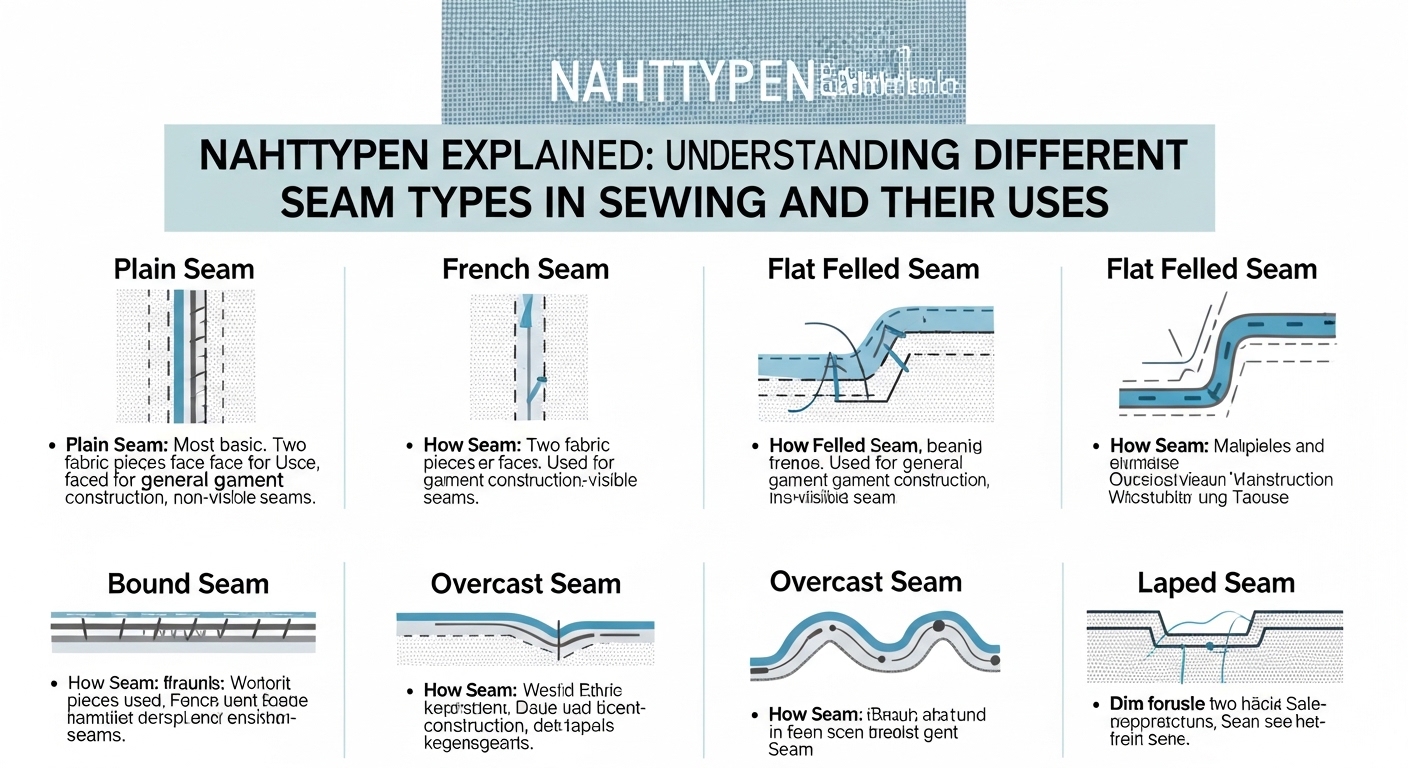
Sewing is both an art and a practical skill, blending creativity with technical precision. At the heart of every well-constructed garment or textile project lies one essential element: the seam. In German, the word “Nahttypen” refers to the various types of seams used in sewing. Understanding these seam types is crucial for anyone looking to improve their sewing skills, whether you are a beginner or an experienced tailor.
This article explores the most common Nahttypen (seam types), their characteristics, and when to use them. By the end, you’ll have a deeper appreciation of how seams influence durability, appearance, and functionality in sewing projects.
What Are Nahttypen?
Nahttypen, or seam types, are the different ways in which two or more pieces of fabric are joined together. Each seam type serves a specific purpose depending on the fabric, garment design, and required strength or finish.
Choosing the right seam is important because it affects:
- Durability – how strong the seam is
- Appearance – how neat or decorative the seam looks
- Comfort – how the seam feels against the skin
- Flexibility – how the seam behaves with movement
1. Plain Seam (Einfache Naht)
The plain seam is the most basic and commonly used seam in sewing. It involves placing two pieces of fabric right sides together and stitching along the edge.
Features:
- Simple and quick to sew
- Suitable for most fabrics
- Forms the foundation for many other seam types
Uses:
- Everyday garments such as shirts, dresses, and trousers
- Beginner sewing projects
Pros:
- Easy to learn
- Versatile
Cons:
- Raw edges may fray if not finished
2. French Seam (Französische Naht)
The French seam is a neat and elegant seam that encloses raw edges within the seam itself.
Features:
- Sewn twice to hide raw edges
- Clean finish on both sides
Uses:
- Lightweight and delicate fabrics such as chiffon, silk, and organza
- Lingerie and fine garments
Pros:
- Prevents fraying
- Professional appearance
Cons:
- Takes more time to sew
- Not suitable for thick fabrics
3. Flat-Felled Seam (Kappnaht)
The flat-felled seam is a strong and durable seam often seen in denim garments.
Features:
- Raw edges are folded and stitched down
- Lies flat against the fabric
Uses:
- Jeans
- Workwear
- Shirts
Pros:
- Extremely strong
- Durable and long-lasting
- Clean finish on both sides
Cons:
- Slightly more complex to sew
- Adds bulk to the fabric
4. Zigzag Seam (Zickzacknaht)
The zigzag seam uses a zigzag stitch instead of a straight stitch.
Features:
- Stretchable
- Prevents fraying
Uses:
- Knit fabrics
- Stretch garments
- Edge finishing
Pros:
- Flexible and adaptable
- Ideal for stretchy materials
Cons:
- Less formal appearance
- Not as strong as some other seams
5. Overlock Seam (Overlocknaht)
The overlock seam is created using a serger (overlock machine), which trims and encloses edges simultaneously.
Features:
- Clean, professional finish
- Prevents fraying
Uses:
- Mass-produced garments
- Knitwear
- Activewear
Pros:
- Fast and efficient
- Durable and neat
Cons:
- Requires a special machine
- Limited decorative options
6. Bound Seam (Einfassnaht)
In a bound seam, the raw edges are enclosed using bias tape or binding.
Features:
- Decorative and functional
- Adds strength to edges
Uses:
- Jackets
- Unlined garments
- Decorative projects
Pros:
- Stylish finish
- Prevents fraying
Cons:
- Requires additional materials
- More time-consuming
7. Lapped Seam (Überlappungsnaht)
The lapped seam involves overlapping two pieces of fabric and stitching them together.
Features:
- Visible stitching
- Strong and decorative
Uses:
- Leatherwork
- Sportswear
- Decorative garments
Pros:
- Adds design interest
- Strong seam
Cons:
- Visible stitching may not suit all designs
8. Double-Stitched Seam
This seam involves sewing two parallel lines of stitching for extra strength.
Features:
- Reinforced structure
- Increased durability
Uses:
- Areas under stress (e.g., armholes, crotches)
- Heavy garments
Pros:
- Very strong
- Reliable
Cons:
- Slightly more time-consuming
9. Slot Seam (Schlitznaht)
A slot seam is decorative and involves placing a third piece of fabric underneath two fabric edges.
Features:
- Decorative appearance
- Adds texture
Uses:
- Fashion garments
- Decorative stitching
Pros:
- Unique design element
- Customizable
Cons:
- Not ideal for beginners
- Time-intensive
10. Welt Seam (Paspelnaht)
The welt seam includes a strip of fabric (welt or piping) inserted between two fabric layers.
Features:
- Decorative detail
- Adds dimension
Uses:
- Upholstery
- Jackets
- Bags
Pros:
- Elegant and stylish
- Enhances design
Cons:
- Requires precision
- More complex to construct
Choosing the Right Seam Type
Selecting the appropriate seam depends on several factors:
1. Fabric Type
- Lightweight fabrics: French seams
- Heavy fabrics: Flat-felled seams
2. Garment Purpose
- Everyday wear: Plain seams
- Activewear: Overlock or zigzag seams
3. Aesthetic Preference
- Clean finish: Bound or French seams
- Decorative look: Welt or slot seams
4. Skill Level
- Beginners: Plain and zigzag seams
- Advanced: Flat-felled, welt, and slot seams
Tips for Working with Different Nahttypen
- Practice on scrap fabric before starting your project
- Use the right needle and thread for your fabric
- Press seams properly to achieve a professional finish
- Finish raw edges to prevent fraying
- Follow seam allowances carefully
Conclusion
Understanding Nahttypen is essential for mastering the art of sewing. Each seam type serves a unique purpose, contributing to the strength, appearance, and comfort of a garment. From the simplicity of the plain seam to the elegance of the French seam and the durability of the flat-felled seam, every technique has its place in sewing.
By learning and experimenting with different seam types, you can elevate your sewing projects from basic to professional quality. Whether you are creating everyday clothing, delicate garments, or decorative pieces, the right seam can make all the difference.
Sewing is not just about joining fabric—it’s about craftsmanship, detail, and creativity. And mastering Nahttypen is a key step toward becoming a skilled and confident sewist.