
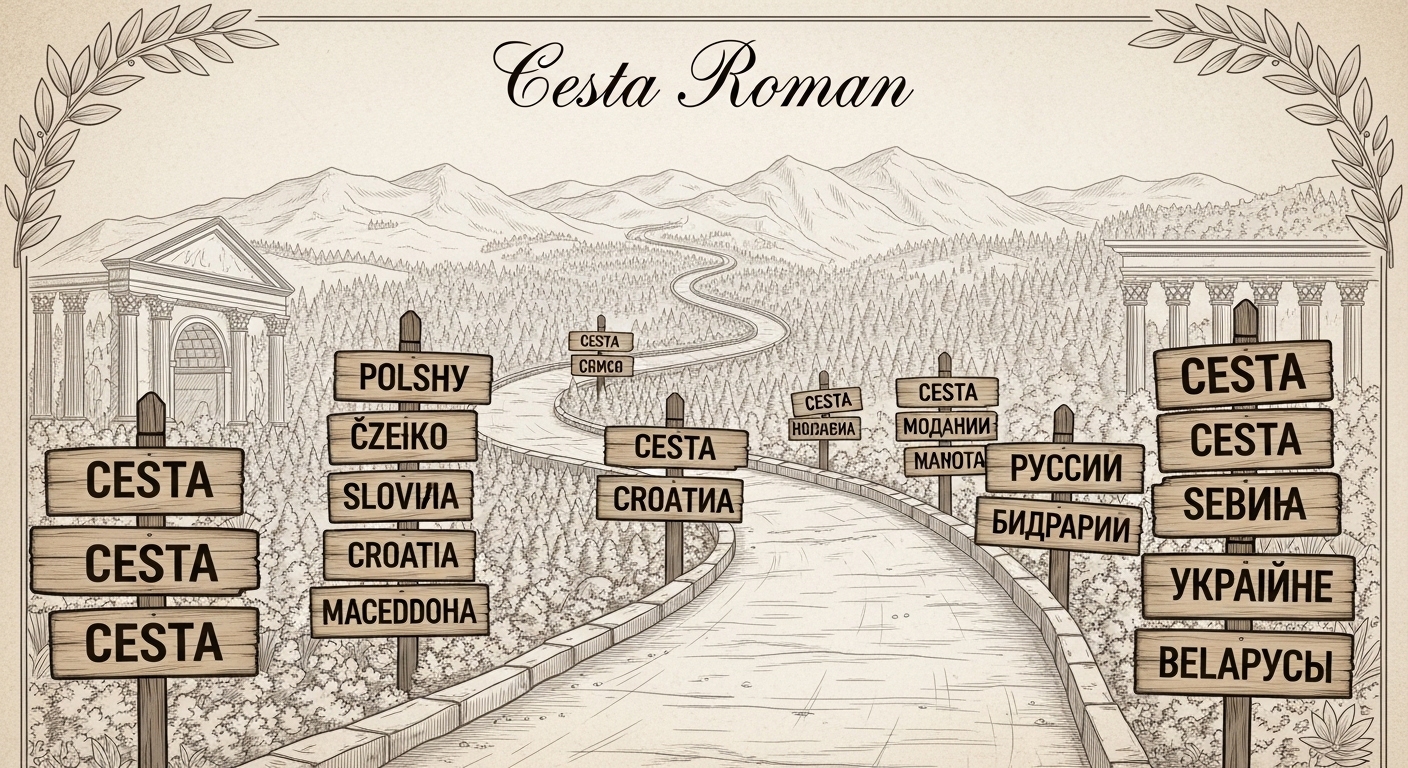
For centuries, the Cesta Roman has woven itself into the fabric of Slavic history and culture. This ancient road is not just a pathway—it’s a vibrant tapestry that tells stories of trade, migration, and cultural exchange. Stretching across various landscapes, it connects communities and carries with it the whispers of those who traveled its length. As we explore its rich past and significance today, we uncover how this remarkable route has shaped identities across generations in Slavic societies. Join us on a journey along the Cesta Roman as we delve into its fascinating origins and enduring legacy.
History and Origins of the Road
The Cesta Roman has deep historical roots, tracing back to the early medieval period. Initially established as a trade route, it facilitated commerce between various Slavic tribes. Goods, ideas, and cultures flowed freely along this path.
As Slavic societies evolved, so did the significance of the road. It became a vital artery for communication and travel. The road witnessed countless stories—battles fought nearby and alliances forged over shared journeys.
Archaeological discoveries along its length reveal remnants of ancient settlements and fortifications. These findings highlight the importance of the Cesta Roman in shaping regional identities.
Local legends often intertwine with its history. Tales passed down generations speak of heroes who traversed its paths. Such narratives enrich cultural heritage while keeping memories alive amidst modernity.
The Significance of the Road in Slavic Cultures
The Cesta Roman holds a profound place in Slavic cultures, symbolizing more than just a travel route. It serves as a historical artery connecting communities and fostering trade among diverse peoples.
Traditionally, roads like the Cesta Roman facilitated cultural exchanges. They allowed for the mingling of languages, customs, and ideas that enriched local traditions.
Festivals often celebrate this road’s legacy, with locals honoring their ancestors who traveled these paths. Stories are shared around fires about journeys made long ago, highlighting resilience and unity.
Moreover, the road is frequently depicted in folklore and literature—an emblem of adventure and exploration. Its presence inspires artists to create works that resonate deeply within Slavic identities.
Even today, it embodies memories of past struggles while paving the way for future generations to cherish their heritage through modern connections to history.
Similarities and Differences in Names Across Slavic Languages
The Cesta Roman is recognized by various names across Slavic languages, reflecting the rich tapestry of cultural nuances. In Czech, it’s referred to as “Cesta Římská,” while in Polish, you’ll find “Droga Rzymska.” Each term embodies local linguistic features and historical influences.
Differences also arise in pronunciation and spelling. For instance, Slovak speakers call it “Rímska cesta,” emphasizing a distinct phonetic style. Meanwhile, Ukrainian translates it as “Римський шлях,” showcasing its own unique script.
Despite these variations, there’s a common reverence for the road’s significance throughout all cultures. This interconnectedness highlights how shared history can shape language yet still embrace regional identities. Understanding these differences enriches our appreciation of the Cesta Roman and its place within Slavic heritage.
Famous Landmarks Along the Cesta Roman
Traveling along the Cesta Roman unveils a treasure trove of landmarks, each steeped in history. One of the most notable is the ancient stone bridge of Virovitica. Its impressive arches tell tales of countless travelers crossing its path.
Another gem is the Church of St. Nicholas located near Križevci. This stunning structure boasts intricate frescoes and serves as a spiritual beacon for locals and visitors alike.
As you journey through picturesque landscapes, don’t miss the historic fortress at Čakovec. With its towering walls and serene moat, it offers a glimpse into medieval times while providing spectacular views.
Every landmark has its own narrative interwoven with folklore and tradition. Exploring these sites enriches any trip down this iconic road, making every stop memorable and educational to those who venture there.
Cultural Traditions and Customs Associated with the Road
The Cesta Roman is more than just a road; it embodies the spirit of Slavic cultures. Along its path, numerous festivals celebrate local heritage and traditions.
One vibrant custom involves pilgrimages undertaken by communities. These journeys often commemorate historical events or pay homage to saints. Participants wear traditional attire, showcasing their cultural pride.
Food plays an essential role in gatherings along the road. Local delicacies are shared during festivities, with dishes passed down through generations. This culinary exchange fosters connection among travelers.
Storytelling also thrives here. Locals recount tales of ancestors and mythical beings tied to the land, weaving history into every conversation.
Music fills the air during celebrations too, with folk songs echoing through villages as people dance together under starlit skies. The Cesta Roman becomes a living canvas where tradition meets community spirit across generations.
Modern Day Usage and Preservation Efforts
Today, the Cesta Roman is more than just a historical route; it thrives as a vibrant pathway for both locals and tourists. Many people walk its length to experience the rich culture and scenic beauty that surround it.
Preservation efforts are vital in maintaining this ancient road’s integrity. Various organizations work diligently to restore sections of the trail, ensuring they remain accessible while honoring their historical significance.
Local communities play a crucial role in these initiatives. They organize events that celebrate traditional practices linked to the road, fostering cultural awareness among younger generations.
Moreover, digital mapping technologies help highlight the Cesta Roman’s importance. These tools provide valuable information about landmarks and trails, making exploration easier for visitors.
Through education and community involvement, the legacy of Cesta Roman continues to thrive today.
The Enduring Legacy of the Cesta Roman in Slavic Society
The legacy of the Cesta Roman continues to resonate within Slavic society today. This historic road serves as more than just a physical pathway; it symbolizes cultural exchange, unity, and resilience among diverse Slavic nations.
Generations have traveled its length, forging connections that transcend borders and languages. The stories embedded in every stone and mile reflect shared histories and collective identities.
Efforts to preserve this iconic route are ongoing, ensuring future generations can experience its significance firsthand. Festivals celebrating local traditions along the Cesta Roman draw people together, reigniting pride in cultural heritage while fostering community spirit.
Through art, literature, and folklore inspired by the road’s rich narrative, the Cesta Roman remains a vital piece of Slavic identity. Its enduring presence is felt not only as a historical landmark but also as an integral thread woven into the fabric of contemporary life across Slavic cultures.
As new generations rediscover its importance, they continue to celebrate both their pasts and shared futures shaped by this remarkable road. The Cesta Roman stands tall—a testament to history’s ability to connect us all.